

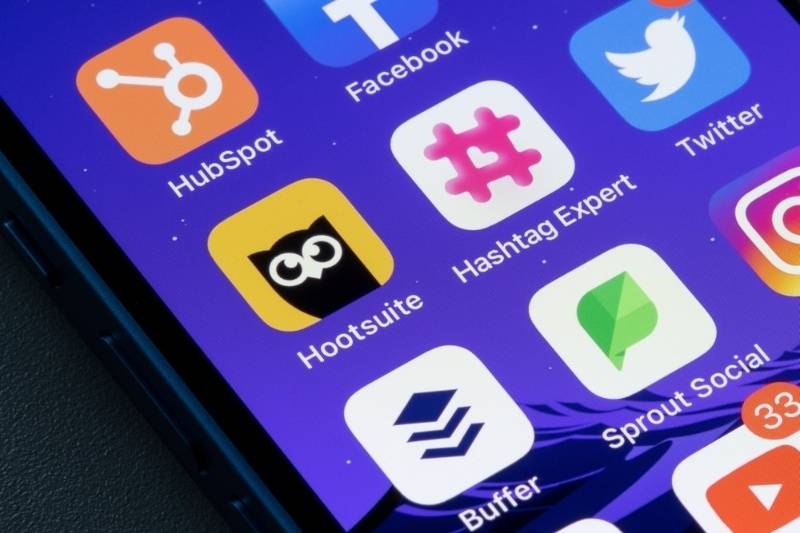
Stop trying to post everything manually. You are wasting hours every single week on tedious tasks that a machine can do in seconds. In 2026, the entire landscape of social media management tools has shifted toward deep AI integration and cross-platform synergy. To scale your business without losing your mind, you need a stack that handles the heavy lifting. Here is exactly how to pick the right platform to dominate your specific niche this year.
Must Read: Craft Customer Engagement Strategies Every Business Needs
You cannot just pick the cheapest software and expect it to work for a growing brand. Look for these non-negotiable features when evaluating content management tools.
Likes are just a dopamine hit—they don't pay your bills. You need gear that tracks the stuff that actually moves the needle, like link-in-bio clicks and how people actually feel about your brand in real-time, instead of just counting up empty heart icons.
Just putting posts on a calendar is amateur hour now. You need a platform with AI that actually does the work, like digging through your history to tell you the exact second to post or predicting if a piece of content is going to flop before you even hit publish.
If your team logs into four different native apps to answer customer complaints, you are bleeding time. Your tool must funnel every single comment, direct message, and brand mention into one collision-proof inbox.
Handing the reins over to software feels risky at first, but the operational advantages are impossible to ignore. Here is why you need to embrace social media automation.
Automation stops you from having to break your stride every five minutes to post. You can just knock out a month’s worth of stuff on a quiet Tuesday and let the app handle the actual legwork of getting it live while you focus on the bigger picture.
Algorithms hate it when you ghost your followers. If you only post when you "feel like it," your reach dies. Automation keeps you on their feed every single day at the perfect time, even if you’re busy running your business and aren't actually glued to your phone.
Think of automated sentiment tracking as a smoke detector for your brand. If a new drop isn't landing and people start complaining, the software pings you immediately. This lets you fix the mess and address the comments before things blow up into a total nightmare.
Don't waste your budget testing junk apps. These are the only tools actually worth your time right now.
The big dog for massive teams. Their OwlyWriter AI is actually useful now—it handles the annoying task of rewriting captions for different platforms and polishing up your old high-performing posts so they feel fresh.
The absolute best option for data-heavy brands. It features an incredibly advanced Smart Inbox with built-in collision detection so two employees never accidentally answer the same message. Its automated reporting is the industry standard for showing ROI.
The perfect solution for lean teams and solopreneurs. It strips away the enterprise clutter and focuses purely on highly intuitive, visual scheduling. In 2026, its AI-driven posting time analysis delivers high-end data at a fraction of the cost.
Built specifically for visual-first brands heavily invested in Instagram, Pinterest, and TikTok. It features a drag-and-drop grid preview and a highly robust Linkin.bio tool to turn social traffic directly into actual e-commerce sales.
A fantastic tool for team collaboration and agency work. It shines with its built-in content ideation features, giving you automated post ideas based on trending topics alongside a very straightforward client approval workflow.
You can no longer rely on foot traffic or word of mouth to keep a business alive. Here is why social media marketing is the foundation of modern brand awareness.
Traditional advertising forces you to interrupt people. Marketing on social platforms allows you to natively inject your brand into the exact digital spaces where your demographic already spends hours scrolling.
It acts as a free, 24/7 focus group. You can launch a raw concept and know immediately, based on comments and shares, whether your market actually cares before you spend money on manufacturing.
You are not paying for a highway billboard that everyone ignores. You target your content so specifically that it only shows up for people who have already demonstrated an active interest in your niche.
If you are posting organically from your phone every day, you are losing the game. Here is how social media scheduling tools change the way you operate.
Instead of reacting daily to whatever is trending, scheduling tools allow your marketing team to map out entire quarterly campaigns in advance.
If your biggest customer base is located abroad, you do not have to wake up at 3:00 AM to post. Scheduling ensures you hit international prime times effortlessly while you sleep.
You can take one core piece of video content, tweak the caption and formatting specifically for LinkedIn, TikTok, and X, and schedule them all to drop simultaneously from one unified dashboard.
Throwing content at the wall and hoping something sticks is a dead strategy. By investing in the right social media management tools, you can completely change how your business operates online. Utilize social media scheduling tools to protect your time, leverage social media automation to ensure ruthless consistency, and connect everything to your broader digital marketing tools to track your actual ROI.
Not necessarily. If you are a solo operator or a local shop, dropping hundreds of dollars a month on enterprise software is a massive waste of capital. Start with affordable content management tools like Buffer or the base tier of Later until your revenue actually justifies a heavy platform upgrade.
No. The algorithms on major platforms do not penalize you for using API-approved third-party social media scheduling tools. They penalize boring, low-effort content. As long as your posts are engaging and native to the platform, automation only helps your consistency, which the algorithm actually rewards.
Definitely not. The software takes the boring grunt work—like data crunching and hitting "publish"—off your plate, but it has the personality of a brick. You still need a human brain to actually connect with people and steer the strategy so your brand doesn't sound like a robot talking to itself.
This content was created by AI