
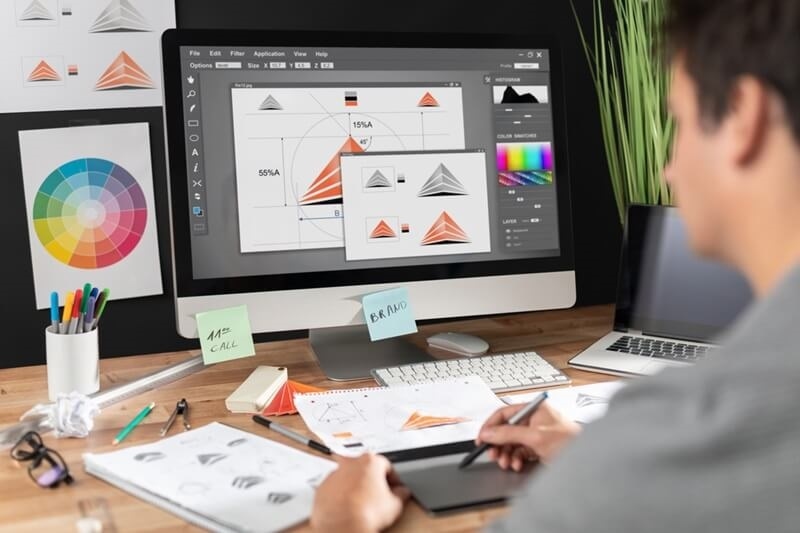
Produce a Strong Visual Identity for Designing Brand Logos

Editor: Ramya CV on Sep 15,2025


Establishing a logo is one of the most critical steps in influencing people's perceptions about a business. A logo is more than a pretty design; it reflects the essence of your business enterprise identity. From visible branding factors that make a format memorable to expert brand format hints that ensure long-lasting enchantment, every choice performs a function. Whether you’re a startup using logo design tools for startups or a longtime organization updating your emblem snapshots manual, your emblem can create a powerful first impression. In this weblog, we’ll show how to provide a robust, visible identification through logo design that resonates and lasts.

Why Designing a Brand Logo Matters for Businesses

An emblem is frequently the first thing people notice about a business employer. It communicates the emblem's personality, values, and promises at a glance. Think of iconic logos like Nike, Apple, or McDonald’s—their imagery is straightforward but includes widespread popularity.

Designing an emblem brand requires more than revolutionary flair; it requires a different approach. A brand must:

  • Be bendy across digital and print codecs
  • Represent your enterprise at the same time as though standing out
  • Evoke consideration and professionalism
  • Be timeless in desire to modern

Even companies with incredible merchandise can appear inconsistent or forgettable without a strong emblem. This is why it is important to invest in a professional emblem format.

Understanding Visual Branding Elements

visual-branding-elements

When developing a logo, seen branding elements act as the building blocks of a recognizable identification. These factors embody:

  • Typography – The choice of font communicates character. Serif fonts often convey lifestyle and agree with, simultaneously, as sans-serif fonts recommend modernity and ease.
  • Color palette – Colors shape perceptions and responses. Blue shows thoughtfulness, pink demonstrates strength, and green has associations with development or sustainability.
  • Shapes and symbols - Circles develop team association, triangles demonstrate dynamism, and some symbols frequently indicate radical.
  • Variability – These considerations should extend beyond the logo and into websites, social media solutions, and packaging.

Understanding how to use visual branding elements rationally means your logo isn't a logo but a signature in a family of logos.

Professional Logo Design Tips for Brand Building

Professional designers use logos in a more structured way than non-professional designers. Here are professional logo design tips that keep your ideas relevant:

  • Think about simplicity - A simple design is more flexible and memory adaptable. Overly complex logos often fail when resized to be made smaller, such as in app icons.
  • Design for all uses— A logo must be adaptable to a billboard-sized display, a business card, and both!
  • Avoid clichés – Generic icons (like lightbulbs for ideas or globes for worldwide attainment) lack originality.
  • Prioritize the area of know-how – Research to ensure your format doesn’t resemble your competitors.
  • Test in black and white – A strong format works even without color, proving its structural power.

These professional brand format recommendations help ensure your layout stays powerful in aggressive markets.

The Role of Color Psychology in Branding

Color psychology in branding is a technology-based method for selecting colors that evoke desired emotions. Since a brand is usually a client’s first touchpoint, shade choice is critical.

  • Red – Passion, urgency, strength. Used by producers like Coca-Cola.
  • Blue – Trust, professionalism, calmness. Preferred by way of economic establishments.
  • Green – Growth, nature, freshness. Popular amongst eco-friendly producers.
  • Black – Luxury, authority, elegance. Associated with fashion brands.
  • Yellow – Optimism, friendliness, creativity. Used by manufacturers like McDonald’s.

Understanding colour psychology in branding guarantees that your brand resonates with the feelings your target marketplace needs to experience. For startups, careful use of colour can differentiate them in crowded markets.

Logo Design Tools for Startups

First, not every enterprise can afford professional layout services. Fortunately, brand design equipment for startups has superior offerings.

Popular picks encompass:

  • Canva – User-friendly with templates and customization.
  • Looka – AI-powered designs tailor-made to company needs.
  • Adobe Express – Great for corporations searching for flexibility with brand snapshots.
  • Hatchful through Shopify – Free and amateur-friendly.

When using brand design gear for startups, customize the format to mirror originality. A mounted template won't offer the differentiation needed to stand out. Combining those systems with a logo photograph guide can help ensure long-term visual consistency.

Building Consistency with a Brand Graphics Guide

An emblem photographs guide (emblem fashion manual) ensures all visual branding elements live cohesively throughout systems. It must include:

  • Logo versions (whole colour, black-and-white, icon-best)
  • Color palette with HEX and CMYK codes
  • Typography recommendations for headings, subheadings, and body text
  • Iconography and imagery hints
  • Usage do’s and don’ts (e.g., warding off stretched emblems or incorrect shade combos)

By following a logo snapshot guide, agencies avoid inconsistencies that confuse audiences and weaken the emblem's reputation. Even startups can benefit from creating an easy guide to support professionalism from the start.

Case Studies of Successful Logo Redesign

Observing how large producers evolve their logos provides education regarding emblem brand development.

  • Pepsi: Color psychology in branding (pink, white, blue) was leveraged in the remodel from its complicated typology to a simplified globe. This branding reinforced patriotism and agreement.
  • Airbnb: The "Bélo" icon included a heart, a location pin, and a person who spoke of community and belonging.
  • Google: Shifted to a cleaner, sans-serif font. The trade improved scalability and virtual readability.

Each redesign highlights how expert logo format recommendations—simplicity, scalability, and emotional resonance—force recognition and consideration.

Common Mistakes to Avoid When Designing a Brand Logo

Even with the proper gadget and hints, errors can derail your brand format technique:

  • Overcomplicating the layout – Too much information makes trademarks much less memorable.
  • Ignoring scalability – A busy layout can fail even as it is shrunk to small sizes.
  • Relying handiest on tendencies – What’s modern-day these days may also revel in preceding the next day.
  • Poor coloration selections – Not considering color psychology in branding can bring about unintentional impressions.
  • LBlind copies – Imitating competitors is destructive.

By investing in preventing pitfalls, agencies can ensure that their trademarks remain timeless and valuable.

A Practicum for Creating a Brand Logo

Below is an outline of the process for creating a strong logo:

  • Research the company - Understand competitors' logos to understand what works and doesn't.
  • Establish your logo personality - Is the company fun, businesslike, high-end, or green?
  • Brainstorm visual cues - Color, shape, and type.
  • Sketch several ideas - Do not accept the first thought.
  • Refine digitally – Use a professional software program or brand-format gadget for startups.
  • Gather feedback – Share prototypes with stakeholders or reputable businesses.
  • Finalize and test – Apply your design throughout multiple touchpoints.

These steps ensure a thorough technique, stopping rushed or underdeveloped trademarks.

Future Trends in Designing Brand Logos

As technology and consumer behavior evolve, so will brand layout trends. Some growing hints encompass:

  • Minimalist gradients – Clean but current designs.
  • Responsive trademarks – Versions that adapt to awesome display sizes.
  • Motion trademarks – Animated designs for digital-first manufacturers.
  • AI-powered designs – Using AI is no longer most effective as a tool but as a part of a logo’s visual identification.

Startups and established businesses must balance adopting trends with ensuring timelessness. A sturdy brand snapshot guide can assist in integrating present-day updates while maintaining consistency.

Final Thoughts on Designing Brand Logos

Designing a logo brand is more than a creative venture—it’s a strategic effort to construct acceptance, recognition, and loyalty. Companies can craft logos that represent them by studying visible branding elements, applying expert brand layout suggestions, understanding colour psychology in branding, and leveraging brand format devices for startups. Backed with a brand pix manual, your visible identity will live steadily and effectively across all touchpoints. Establishing a logo is one of the most critical steps in influencing people's perceptions about a business. A robust emblem doesn’t just mark your brand; it makes your logo memorable. 


This content was created by AI